Books

What I've read recently

The Ballad of Songbirds and Snakes (The Hunger Games, #0)

Suzanne Collins2020

Ambition will fuel him. Competition will drive him. But power has its price. It is the morning of the reaping that will kick off the tenth annual Hunger Games. In the Capitol, eighteen-year-old Coriolanus Snow is preparing for his one shot at glory as a mentor in the Games. The once-mighty house of Snow has fallen on hard times, its fate hanging on the slender chance that Coriolanus will be able to outcharm, outwit, and outmaneuver his fellow students to mentor the winning tribute. The odds are against him. He's been given the humiliating assignment of mentoring the female tribute from District 12, the lowest of the low. Their fates are now completely intertwined -- every choice Coriolanus makes could lead to favor or failure, triumph or ruin. Inside the arena, it will be a fight to the death. Outside the arena, Coriolanus starts to feel for his doomed tribute... and must weigh his need to follow the rules against his desire to survive no matter what it takes.

The Martian

Andy Weir2011

Six days ago, astronaut Mark Watney became one of the first people to walk on Mars. Now, he’s sure he’ll be the first person to die there. After a dust storm nearly kills him and forces his crew to evacuate while thinking him dead, Mark finds himself stranded and completely alone with no way to even signal Earth that he’s alive—and even if he could get word out, his supplies would be gone long before a rescue could arrive. Chances are, though, he won’t have time to starve to death. The damaged machinery, unforgiving environment, or plain-old “human error” are much more likely to kill him first. But Mark isn’t ready to give up yet. Drawing on his ingenuity, his engineering skills — and a relentless, dogged refusal to quit — he steadfastly confronts one seemingly insurmountable obstacle after the next. Will his resourcefulness be enough to overcome the impossible odds against him?

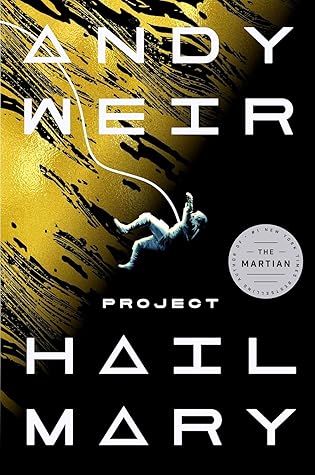
Project Hail Mary

Andy Weir2021

Ryland Grace is the sole survivor on a desperate, last-chance mission—and if he fails, humanity and the earth itself will perish. Except that right now, he doesn’t know that. He can’t even remember his own name, let alone the nature of his assignment or how to complete it. All he knows is that he’s been asleep for a very, very long time. And he’s just been awakened to find himself millions of miles from home, with nothing but two corpses for company. His crewmates dead, his memories fuzzily returning, Ryland realizes that an impossible task now confronts him. Hurtling through space on this tiny ship, it’s up to him to puzzle out an impossible scientific mystery—and conquer an extinction-level threat to our species. And with the clock ticking down and the nearest human being light-years away, he’s got to do it all alone. Or does he?

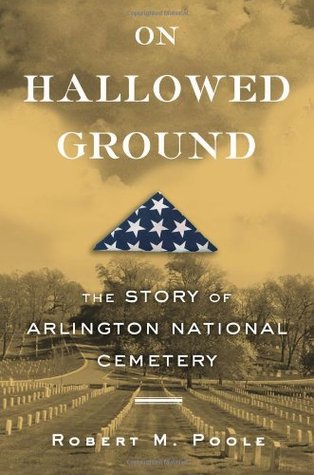
On Hallowed Ground: The Story of Arlington National Cemetery

Robert M. Poole2009

An intimate, behind-the-scenes chronicle of America’s most sacred ground. “Along Eisenhower Drive, as far as the eye could see, the grave markers formed into bone-white brigades, climbed from the flats of the Potomac River, and scattered over the green Virginia hills in perfect order. They reached Arlington’s highest point, where they encircled an old cream-colored mansion with thick columns and a commanding view of the cemetery, the river, and the city beyond. The mansion’s flag, just lowered to half-staff, signaled that it was time to start another day of funerals, which would add more than twenty new conscripts to Arlington’s army of the dead.” So does Robert Poole describe a day like so many others in the long and storied history of Arlington National Cemetery. Created towards the end of our greatest national crucible, the Civil War, its story—as revealed in On Hallowed Ground —reflects much of America’s own over the past century and a half. The mansion at its heart, and the rolling land on which it sits, had been the family plantation of Robert E. Lee before he joined the Confederacy; strategic to the defense of Washington, it became a Union headquarters, a haven for freedmen, and a burial ground for indigent soldiers before Secretary of War Edwin Stanton made it the latest in the newly established national cemetery system. It would become our nation’s most honored resting place. No other country makes the effort the United States does to recover and pay tribute to its war dead—an effort Poole reveals in poignant details from the aftermaths of the Civil War, Spanish-American War, World Wars I and II, Korea, Vietnam, and the conflicts in the Gulf and Afghanistan today. Every tombstone at Arlington tells a story: from Private William Christman, the first soldier buried at Arlington on May 13, 1864, to Union General Montgomery Meigs, whose idea Arlington was; from Lieutenant Thomas Selfridge, the first casualty of powered flight, to Audie Murphy, America’s most decorated soldier; from the Tomb of the Unknown Soldier, so lovingly tended today, to John F. Kennedy’s eternal flame; from scientists and slaves to jurists and generals and tens of thousands of ordinary citizen-warriors, among the more than 300,000 interred on Arlington’s 624 acres. Their sagas, and the rites and rituals that have evolved at Arlington—the horse-drawn caissons, marble headstones, playing of taps, and rifle salutes—speak to us all.

The New Guys: The Historic Class of Astronauts That Broke Barriers and Changed the Face of Space Travel

Meredith Bagby2023

The never-before-told story of NASA’s 1978 astronaut class, which included the first American women, the first African Americans, the first Asian American, and the first gay person to fly to space. With the exclusive participation of the astronauts who were there, this is the thrilling, behind-the-scenes saga of a new generation that transformed space exploration The story of NASA’s Astronaut Class 8, or “The F*cking New Guys,” as their military predecessors nicknamed them, is an unprecedented look at these extraordinary explorers who broke barriers and blasted through glass ceilings. Egos clashed, ambitions flared, and romances bloomed as the New Guys competed with one another and navigated the cutthroat internal politics at NASA for a chance to rocket to the stars. Marking a departure from the iconic military test pilots who had dominated the space program since its inception, the New Guys arrived at the dawn of a new era of space flight. Teardrop-shaped space capsules from Mercury, Gemini, and Apollo gave way to the space shuttle, a revolutionary space plane capable of launching like a rocket, hauling cargo like a truck, and landing back on Earth like an airliner. They mastered this new machine from its dangerous first test flights to its greatest achievements: launching hundreds of satellites, building the International Space Station, and deploying the Hubble Space Telescope. The New Guys depicts these charismatic young astronauts and the exuberant social and scientific progress of the space shuttle program against the efforts of NASA officials who struggled to meet America’s military demands and commercial aspirations. When NASA was pressured to fly more often and at greater risk, lives were lost in the program’s two biggest disasters: Challenger (1986) and Columbia (2003). Caught in the crosshairs of this battle are the shuttle astronauts who gave their lives in those catastrophes, and who gave their lives’ work pursuing a more equitable future in space for all humankind. Through it all they became friends, rivals, lovers, and ultimately, family.

Console Wars: Sega, Nintendo, and the Battle that Defined a Generation

Blake J. Harris2014

Following the success of The Accidental Billionaires and Moneyball comes Console Wars—a mesmerizing, behind-the-scenes business thriller that chronicles how Sega, a small, scrappy gaming company led by an unlikely visionary and a team of rebels, took on the juggernaut Nintendo and revolutionized the video game industry. In 1990, Nintendo had a virtual monopoly on the video game industry. Sega, on the other hand, was just a faltering arcade company with big aspirations and even bigger personalities. But that would all change with the arrival of Tom Kalinske, a man who knew nothing about videogames and everything about fighting uphill battles. His unconventional tactics, combined with the blood, sweat and bold ideas of his renegade employees, transformed Sega and eventually led to a ruthless David-and-Goliath showdown with rival Nintendo. The battle was vicious, relentless, and highly profitable, eventually sparking a global corporate war that would be fought on several fronts: from living rooms and schoolyards to boardrooms and Congress. It was a once-in-a-lifetime, no-holds-barred conflict that pitted brother against brother, kid against adult, Sonic against Mario, and the US against Japan. Based on over two hundred interviews with former Sega and Nintendo employees, Console Wars is the underdog tale of how Kalinske miraculously turned an industry punchline into a market leader. It's the story of how a humble family man, with an extraordinary imagination and a gift for turning problems into competitive advantages, inspired a team of underdogs to slay a giant and, as a result, birth a $60 billion dollar industry.

You Are a Badass: How to Stop Doubting Your Greatness and Start Living an Awesome Life

Jen Sincero2013

The #1 New York Times Bestseller You Are A Badass is the self-help book for people who desperately want to improve their lives but don't want to get busted doing it. In this refreshingly entertaining how-to guide, #1 New York Times Bestselling Author and world-traveling success coach, Jen Sincero, serves up 27 bite-sized chapters full of hilariously inspiring stories, sage advice, easy exercises, and the occasional swear word. If you're ready to make some serious changes around here, You Are a Badass will help you: Identify and change the self-sabotaging beliefs and behaviors that stop you from getting what you want, blast past your fears so you can take big exciting risks, figure out how to make some damn money already, learn to love yourself and others, set big goals and reach them - it will basically show you how to create a life you totally love, and how to create it now . By the end of You Are a Badass , you'll understand why you are how you are, how to love what you can't change, how to change what you don't love, and how to use The Force to kick some serious ass.

Operation Paperclip: The Secret Intelligence Program that Brought Nazi Scientists to America

Annie Jacobsen2014

The “remarkable” story of America's secret post-WWII science programs ( The Boston Globe ), from the New York Times bestselling author of Area 51 . In the chaos following World War II, the U.S. government faced many difficult decisions, including what to do with the Third Reich's scientific minds. These were the brains behind the Nazis' once-indomitable war machine. So began Operation Paperclip, a decades-long, covert project to bring Hitler's scientists and their families to the United States. Many of these men were accused of war crimes, and others had stood trial at Nuremberg; one was convicted of mass murder and slavery. They were also directly responsible for major advances in rocketry, medical treatments, and the U.S. space program. Was Operation Paperclip a moral outrage, or did it help America win the Cold War? Drawing on exclusive interviews with dozens of Paperclip family members, colleagues, and interrogators, and with access to German archival documents (including previously unseen papers made available by direct descendants of the Third Reich's ranking members), files obtained through the Freedom of Information Act, and dossiers discovered in government archives and at Harvard University, Annie Jacobsen follows more than a dozen German scientists through their postwar lives and into a startling, complex, nefarious, and jealously guarded government secret of the twentieth century. In this definitive, controversial look at one of America's most strategic, and disturbing, government programs, Jacobsen shows just how dark government can get in the name of national security.

The Case for Christ

Lee Strobel1998

There's little question that he actually lived. But miracles? Rising from the dead? Some of the stories you hear about him sound like just that - stories. A reasonable person would never believe them, let alone the claim that he's the only way to God! But a reasonable person would also make sure that he or she understood the facts before jumping to conclusions. That's why Lee Strobel - an award-winning legal journalist with a knack for asking tough questions - decided to investigate Jesus for himself. An atheist, Strobel felt certain his findings would bring Christianity's claims about Jesus tumbling down like a house of cards. He was in for the surprise of his life. Join him as he retraces his journey from skepticism to faith. You'll consult expert testimony as you sift through the truths that history, science, psychiatry, literature, and religion reveal. Like Strobel, you'll be amazed at the evidence - how much there is, how strong it is, and what it says. The facts are in. What will your verdict be in The Case for Christ?

Killing Reagan: The Violent Assault That Changed a Presidency

Bill O'Reilly2015

From the bestselling team of Bill O'Reilly and Martin Dugard comes Killing Reagan, a page-turning epic account of the career of President Ronald Reagan that tells the vivid story of his rise to power--and the forces of evil that conspired to bring him down. The basis for the 2016 television movie available on streaming. Just two months into his presidency, Ronald Reagan lay near death after a gunman's bullet came within inches of his heart. His recovery was nothing short of remarkable -- or so it seemed. But Reagan was grievously injured, forcing him to encounter a challenge that few men ever face. Could he silently overcome his traumatic experience while at the same time carrying out the duties of the most powerful man in the world?Told in the same riveting fashion as Killing Lincoln, Killing Kennedy, Killing Jesus, and Killing Patton, Killing Reagan reaches back to the golden days of Hollywood, where Reagan found both fame and heartbreak, up through the years in the California governor's mansion, and finally to the White House, where he presided over boom years and the fall of the Iron Curtain. But it was John Hinckley Jr.'s attack on him that precipitated President Reagan's most heroic actions. In Killing Reagan, O'Reilly and Dugard take readers behind the scenes, creating an unforgettable portrait of a great man operating in violent times.

Killing England: The Brutal Struggle for American Independence

Bill O'Reilly2017

Told through the eyes of George Washington, Benjamin Franklin, Thomas Jefferson, and Great Britain’s King George III, Killing England chronicles the path to independence in gripping detail, taking the reader from the battlefields of America to the royal courts of Europe. What started as protest and unrest in the colonies soon escalated to a world war with devastating casualties. O’Reilly and Dugard recreate the war’s landmark battles, including Bunker Hill, Long Island, Saratoga, and Yorktown, revealing the savagery of hand-to-hand combat and the often brutal conditions under which these brave American soldiers lived and fought. Also here is the reckless treachery of Benedict Arnold and the daring guerilla tactics of the “Swamp Fox” Frances Marion.

Half American: The Epic Story of African Americans Fighting World War II at Home and Abroad

Matthew F. Delmont2022

The definitive history of World War II from the African American perspective, written by civil rights expert and Dartmouth history professor Matthew Delmont Over one million Black men and women served in World War II. Black troops were at Normandy, Iwo Jima, and the Battle of the Bulge, serving in segregated units and performing unheralded but vital support jobs, only to be denied housing and educational opportunities on their return home. Without their crucial contributions to the war effort, the United States could not have won the war. And yet the stories of these Black veterans have long been ignored, cast aside in favor of the myth of the “Good War” fought by the “Greatest Generation.” Half American is American history as you’ve likely never read it before. In these pages are stories of Black heroes such as Thurgood Marshall, the chief lawyer for the NAACP, who investigated and publicized violence against Black troops and veterans; Benjamin O. Davis, Jr., leader of the Tuskegee Airmen, who was at the forefront of the years-long fight to open the Air Force to Black pilots; Ella Baker, the civil rights leader who advocated on the home front for Black soldiers, veterans, and their families; James Thompson, the 26-year-old whose letter to a newspaper laying bare the hypocrisy of fighting against fascism abroad when racism still reigned at home set in motion the Double Victory campaign; and poet Langston Hughes, who worked as a war correspondent for the Black press. Their bravery and patriotism in the face of unfathomable racism is both inspiring and galvanizing. In a time when the questions World War II raised regarding race and democracy in America remain troublingly relevant and still unanswered, this meticulously researched retelling makes for urgently necessary reading.

Killing the SS: The Hunt for the Worst War Criminals in History

Bill O'Reilly2018

Confronting Nazi evil is the subject of the latest installment in the mega-bestselling Killing series As the true horrors of the Third Reich began to be exposed immediately after World War II, the Nazi war criminals who committed genocide went on the run. A few were swiftly caught, including the notorious SS leader, Heinrich Himmler. Others, however, evaded capture through a sophisticated Nazi organization designed to hide them. Among those war criminals were Josef Mengele, the "Angel of Death" who performed hideous medical experiments at Auschwitz; Martin Bormann, Hitler's brutal personal secretary; Klaus Barbie, the cruel "Butcher of Lyon"; and perhaps the most awful Nazi of all: Adolf Eichmann. Killing the SS is the epic saga of the espionage and daring waged by self-styled "Nazi hunters." This determined and disparate group included a French husband and wife team, an American lawyer who served in the army on D-Day, a German prosecutor who had signed an oath to the Nazi Party, Israeli Mossad agents, and a death camp survivor. Over decades, these men and women scoured the world, tracking down the SS fugitives and bringing them to justice, which often meant death. Written in the fast-paced style of the Killing series, Killing the SS will educate and stun the reader. The final chapter is truly shocking.

Killing Kennedy: The End of Camelot

Bill O'Reilly2012

More than two million readers have thrilled to Bill O'Reilly and historian Martin Dugard's Killing Lincoln , the riveting work of nonfiction about the shocking assassination that changed the course of American history. Now the anchor of The O'Reilly Factor recounts in gripping detail the brutal murder of John Fitzgerald Kennedy - and how a sequence of gunshots on a Dallas afternoon not only killed a beloved president but also sent the nation into the cataclysmic division of the Vietnam War and its culture-changing aftermath. In January 1961, as the cold war escalates, John F. Kennedy struggles to contain the growth of communism while he learns the hardships of solitude, and temptations of what it means to be president of the United States. His beautiful young wife, Jackie, must also adjust to a life of constant scrutiny. Despite personal and political trials, Kennedy's approval ratings soar. At the same time, JFK acquires a number of formidable enemies, among them Soviet leader Nikita Khruschev, Cuban dictator Fidel Castro, and Allen Dulles, director of the Central Intelligence Agency. When his brother, Attorney General Robert Kennedy, cracks down on powerful elements of organised crime, the list of those who have it in for the president grows. Then, in the midst of a 1963 campaign trip to Texas, Kennedy is gunned down, resulting in national chaos. Jackie and the nation mourn while the hunt for the perpetrators commences. The events leading up to the most notorious crime of the twentieth century are almost as shocking as the assassination itself. A page-turner from beginning to end, Killing Kennedy chronicles both the heroism and deceit of Camelot, bringing history to life in ways that will profoundly move the reader.

Killing Jesus: A History

Bill O'Reilly2013

Millions of readers have thrilled to bestselling authors Bill O'Reilly and historian Martin Dugard's Killing Kennedy and Killing Lincoln , page-turning works of nonfiction that have changed the way we read history. Now the anchor of The O'Reilly Factor details the events leading up to the murder of the most influential man in history: Jesus of Nazareth. Nearly two thousand years after this beloved and controversial young revolutionary was brutally killed by Roman soldiers, more than 2.2 billion human beings attempt to follow his teachings and believe he is God. Killing Jesus will take readers inside Jesus's life, recounting the seismic political and historical events that made his death inevitable - and changed the world forever.

The Age of Gold: The California Gold Rush and the New American Dream (Search and Recover)

H.W. Brands2002

From the two-time Pulitzer Prize finalist, bestselling historian, and author of Our First Civil War —the epic story of the California Gold Rush, “a fine, robust telling of one of the greatest adventure stories in history" (David McCullough, Pulitzer Prize-winning author of John Adams ). The California Gold Rush inspired a new American dream—the “dream of instant wealth, won by audacity and good luck.” The discovery of gold on the American River in 1848 triggered the most astonishing mass movement of peoples since the Crusades. It drew fortune-seekers from the ends of the earth, accelerated America’s imperial expansion, and exacerbated the tensions that exploded in the Civil War. H.W. Brands tells his epic story from multiple of adventurers John and Jessie Fremont, entrepreneur Leland Stanford, and the wry observer Samuel Clemens—side by side with prospectors, soldiers, and scoundrels. He imparts a visceral sense of the distances they traveled, the suffering they endured, and the fortunes they made and lost. Impressive in its scholarship and overflowing with life, The Age of Gold is history in the grand traditions of Stephen Ambrose and David McCullough.

Talking to Strangers: What We Should Know About the People We Don't Know

Malcolm Gladwell2019

Malcolm Gladwell, host of the podcast Revisionist History and author of the #1 New York Times bestseller Outliers , offers a powerful examination of our interactions with strangers -- and why they often go wrong. How did Fidel Castro fool the CIA for a generation? Why did Neville Chamberlain think he could trust Adolf Hitler? Why are campus sexual assaults on the rise? Do television sitcoms teach us something about the way we relate to each other that isn't true? While tackling these questions, Malcolm Gladwell was not solely writing a book for the page. He was also producing for the ear. In the audiobook version of Talking to Strangers, you'll hear the voices of people he interviewed--scientists, criminologists, military psychologists. Court transcripts are brought to life with re-enactments. You actually hear the contentious arrest of Sandra Bland by the side of the road in Texas. As Gladwell revisits the deceptions of Bernie Madoff, the trial of Amanda Knox, and the suicide of Sylvia Plath, you hear directly from many of the players in these real-life tragedies. There's even a theme song - Janelle Monae's "Hell You Talmbout." Something is very wrong, Gladwell argues, with the tools and strategies we use to make sense of people we don't know. And because we don't know how to talk to strangers, we are inviting conflict and misunderstanding in ways that have a profound effect on our lives and our world.

Killers of the Flower Moon: The Osage Murders and the Birth of the FBI

David Grann2017

In the 1920s, the richest people per capita in the world were members of the Osage Nation in Oklahoma. After oil was discovered beneath their land, the Osage rode in chauffeured automobiles, built mansions, and sent their children to study in Europe. Then, one by one, the Osage began to be killed off. The family of an Osage woman, Mollie Burkhart, became a prime target. One of her relatives was shot. Another was poisoned. And this was just the beginning, as more and more Osage were dying under mysterious circumstances, and many of those who dared to investigate the killings were themselves murdered. As the death toll rose, the newly created FBI took up the case, and the young director, J. Edgar Hoover, turned to a former Texas Ranger named Tom White to try to unravel the mystery. White put together an undercover team, including a Native American agent who infiltrated the region, and together with the Osage began to expose one of the most chilling conspiracies in American history.

Revenge of the Tipping Point

Malcolm Gladwell2024

Twenty-five years after the publication of his groundbreaking first book, Malcolm Gladwell returns with a brand-new volume that reframes the lessons of The Tipping Point in a startling and revealing light. Why is Miami…Miami? What does the heartbreaking fate of the cheetah tell us about the way we raise our children? Why do Ivy League schools care so much about sports? What is the Magic Third, and what does it mean for racial harmony? In this provocative new work, Malcolm Gladwell returns for the first time in twenty-five years to the subject of social epidemics and tipping points, this time with the aim of explaining the dark side of contagious phenomena. Through a series of riveting stories, Gladwell traces the rise of a new and troubling form of social engineering. He takes us to the streets of Los Angeles to meet the world’s most successful bank robbers, rediscovers a forgotten television show from the 1970s that changed the world, visits the site of a historic experiment on a tiny cul-de-sac in northern California, and offers an alternate history of two of the biggest epidemics of our day: COVID and the opioid crisis. Revenge of the Tipping Point is Gladwell’s most personal book yet. With his characteristic mix of storytelling and social science, he offers a guide to making sense of the contagions of modern world. It’s time we took tipping points seriously.

Greenlights

Matthew McConaughey2020

I’ve been in this life for fifty years, been trying to work out its riddle for forty-two, and been keeping diaries of clues to that riddle for the last thirty-five. Notes about successes and failures, joys and sorrows, things that made me marvel, and things that made me laugh out loud. How to be fair. How to have less stress. How to have fun. How to hurt people less. How to get hurt less. How to be a good man. How to have meaning in life. How to be more me. Recently, I worked up the courage to sit down with those diaries. I found stories I experienced, lessons I learned and forgot, poems, prayers, prescriptions, beliefs about what matters, some great photographs, and a whole bunch of bumper stickers. I found a reliable theme, an approach to living that gave me more satisfaction, at the time, and still: If you know how, and when, to deal with life’s challenges - how to get relative with the inevitable - you can enjoy a state of success I call “catching greenlights.” So I took a one-way ticket to the desert and wrote this book: an album, a record, a story of my life so far. This is fifty years of my sights and seens, felts and figured-outs, cools and shamefuls. Graces, truths, and beauties of brutality. Getting away withs, getting caughts, and getting wets while trying to dance between the raindrops. Hopefully, it’s medicine that tastes good, a couple of aspirin instead of the infirmary, a spaceship to Mars without needing your pilot’s license, going to church without having to be born again, and laughing through the tears. It’s a love letter. To life. It’s also a guide to catching more greenlights - and to realizing that the yellows and reds eventually turn green too. Good luck.

The Devil in the White City: Murder, Magic, and Madness at the Fair That Changed America

Erik Larson2003

Author Erik Larson imbues the incredible events surrounding the 1893 Chicago World's Fair with such drama that readers may find themselves checking the book's categorization to be sure that 'The Devil in the White City' is not, in fact, a highly imaginative novel. Larson tells the stories of two men: Daniel H. Burnham, the architect responsible for the fair's construction, and H.H. Holmes, a serial killer masquerading as a charming doctor. Burnham's challenge was immense. In a short period of time, he was forced to overcome the death of his partner and numerous other obstacles to construct the famous "White City" around which the fair was built. His efforts to complete the project, and the fair's incredible success, are skillfully related along with entertaining appearances by such notables as Buffalo Bill Cody, Susan B. Anthony, and Thomas Edison. The activities of the sinister Dr. Holmes, who is believed to be responsible for scores of murders around the time of the fair, are equally remarkable. He devised and erected the World's Fair Hotel, complete with crematorium and gas chamber, near the fairgrounds and used the event as well as his own charismatic personality to lure victims. Combining the stories of an architect and a killer in one book, mostly in alternating chapters, seems like an odd choice but it works. The magical appeal and horrifying dark side of 19th-century Chicago are both revealed through Larson's skillful writing. - John Moe

Neuromancer (Sprawl, #1)

William Gibson1984

Winner of the Hugo, Nebula, and Philip K. Dick Awards, Neuromancer is a science fiction masterpiece—a classic that ranks as one of the twentieth century’s most potent visions of the future. Case was the sharpest data-thief in the matrix—until he crossed the wrong people and they crippled his nervous system, banishing him from cyberspace. Now a mysterious new employer has recruited him for a last-chance run at an unthinkably powerful artificial intelligence. With a dead man riding shotgun and Molly, a mirror-eyed street-samurai, to watch his back, Case is ready for the adventure that upped the ante on an entire genre of fiction. Neuromancer was the first fully-realized glimpse of humankind’s digital future—a shocking vision that has challenged our assumptions about technology and ourselves, reinvented the way we speak and think, and forever altered the landscape of our imaginations.

To Kill a Mockingbird

Harper Lee1960

One of the best-loved stories of all time, To Kill a Mockingbird has been translated into more than forty languages, sold more than forty million copies worldwide, served as the basis for an enormously popular motion picture, and was voted one of the best novels of the twentieth century by librarians across the country. A gripping, heart-wrenching, and wholly remarkable coming-of-age tale in a South poisoned by virulent prejudice, it views a world of great beauty and savage iniquities through the eyes of a young girl, as her father — a crusading local lawyer — risks everything to defend a black man unjustly accused of a terrible crime.

View on Goodreads